Case Studies
Groover Labs — Social Media & Content Strategy
Challenge
Groover Labs is a nonprofit coworking and product-prototyping space in Wichita, built to connect people and resources that grow the local tech economy. The social presence wasn't reflecting that mission. The feed was mostly event announcements, the membership growth had stalled, and one office type in particular, the dedicated desks, had struggled to find any market fit at all, gaining only 1 new member in the prior year.
Strategy
I rebuilt the content approach around three pillars: Community (the people in the space and the work they're doing), Founders (what early-stage builders are learning and working through), and What Groover Labs Is (clear, simple explanations of the space and how it works for newcomers).
Rather than just posting more, I shifted the type of content: member stories and everyday moments instead of event flyers, founder features on the blog and newsletter that doubled as both a platform for members and inspiration for prospects, and explainer content that made the value of the space legible to people who'd never set foot inside it.
I also paired this organic, emotional content with paid ads that targeted relational pain points members were actually feeling, like loneliness and distraction working from home. The psychographics of our audience determine the tone and messaging. The organic content built trust and community buy-in; the ads converted on the specific reasons someone would actually join.
One specific challenge within that work was figuring out who the dedicated desk product was actually for, and how to reach them. I identified that the pain points driving that decision (loneliness, distraction, the isolation of working from home) weren't being addressed in the content at all. I built a campaign pairing organic community content with paid ads targeting those specific pain points, designed to reach the right audience rather than just a bigger one.
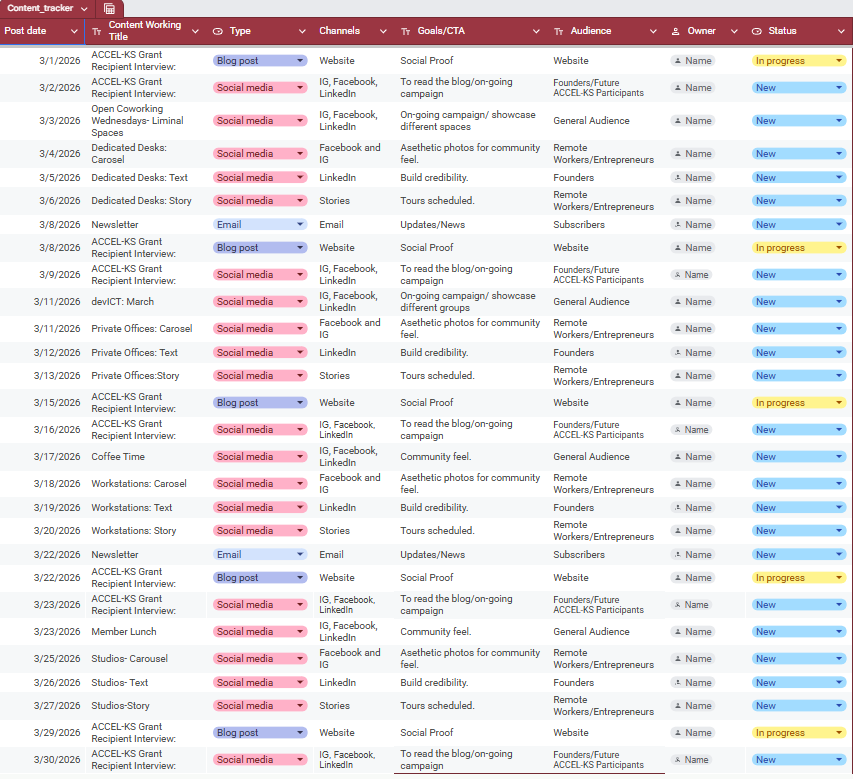
Above is an editorial calendar. (Click to enlarge)
Result
LinkedIn engagement rate grew from 8.89% (2024 Q1) to 12.03% (2026 Q2), holding a 2–3% year-over-year increase across all quarters
A clearer, more consistent identity across blog, newsletter, and social, all pointing toward the same goal
A repeatable content rhythm the team could sustain and fine-tune going forward
A targeted campaign for one underperforming office type added 4 new members ($940/month in new recurring revenue) after that product had gained only 1 member the entire prior year
A creative, no-budget organic campaign filled all four vacant offices in seven weeks, adding $2,295/month in new recurring revenue
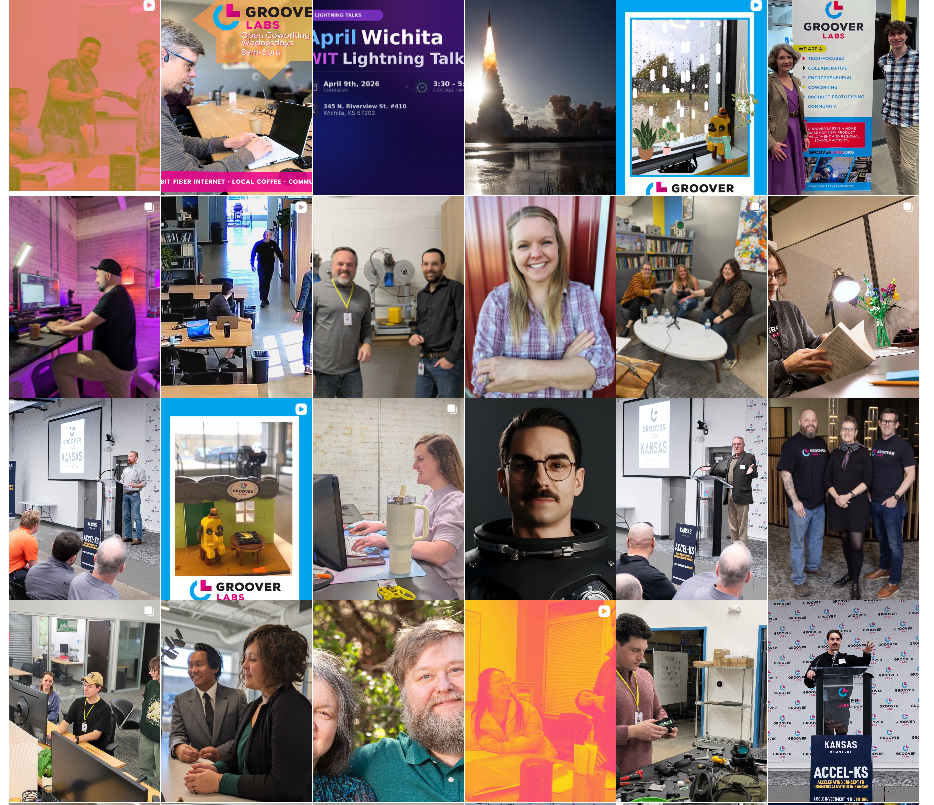
Instagram feed 2026
Above is the Groover Labs Instagram feed from 2026
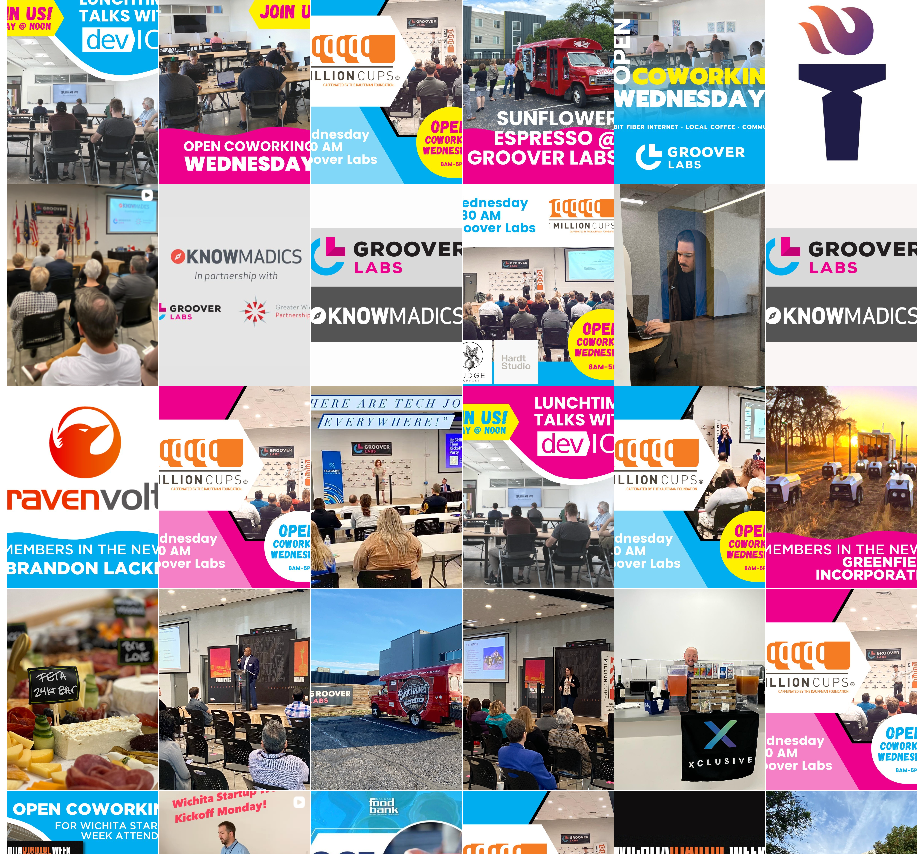
Instagram feed 2022
Above is the Groover Labs Instagram feed from 2022
Real Estate Photographer Rebrand — Brand & Content Strategy
Challenge
A local real estate photographer wanted to shift her business toward architectural photography, work she found more meaningful, and reach a different type of client to support that shift. The trouble was that her brand, website, and social presence were all still speaking to her old audience, which made it hard for the right clients to find or recognize her in this new direction.
Strategy
I started by researching her competitors and the type of clients she wanted to attract, architectural firms, developers, and construction companies, to understand how they talk about their work and what they look for in a photographer. From there, I rebuilt her brand around that positioning: a new website that presented her as an architectural photographer first, updated social pages to match, and a content schedule built specifically around the goals and timeline she wanted to hit.
Result
Within the first three months, she began working with several well-known architectural firms, development companies, and construction companies
Those relationships have continued as regular, repeat contracts
A brand and online presence that now matches the type of work and clients she actually wants
Writing Samples
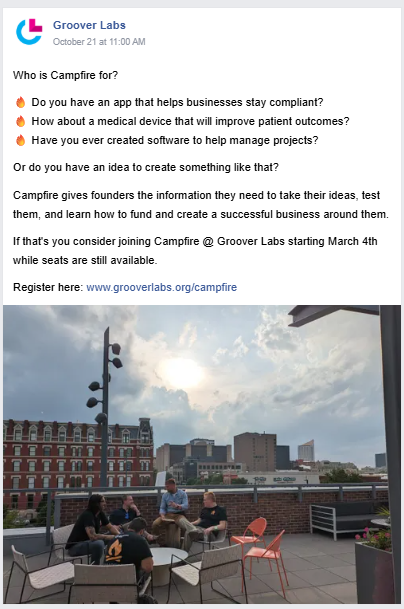
Social Post: Groover Labs, Campfire Campaign. My goal was to give credibility to the program by pointing to real-life examples and asking the audience to put themselves in their shoes.
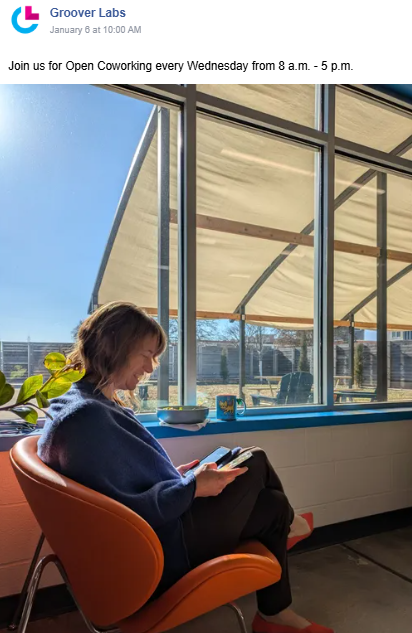
Social Post: Groover Labs, Open Coworking Wednesdays. Sometimes the visual speaks for itself. I wanted to capture the cozy feeling of working from the Groover Labs hotseat area. Engagement rate for this post was 12.63%
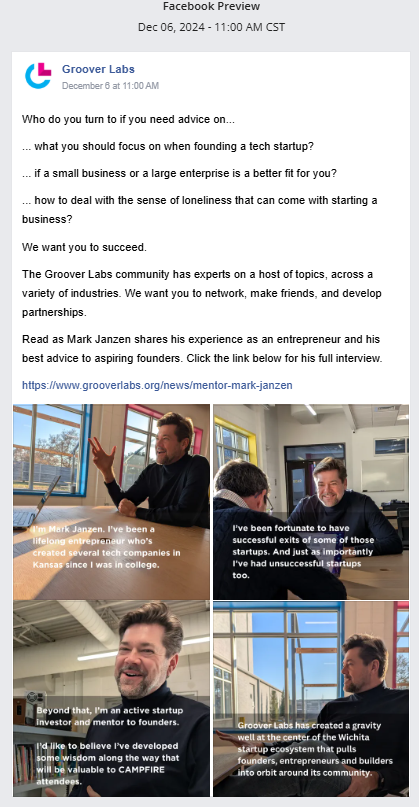
Social Post: Groover Labs, Hotseats Campaign. This is a series where I interviewed and highlighted several mentors in the community with the intention of showing the sort of connections a member can make. The campaign was successful with this post performing particularly well with an engagement rate of 29.70%
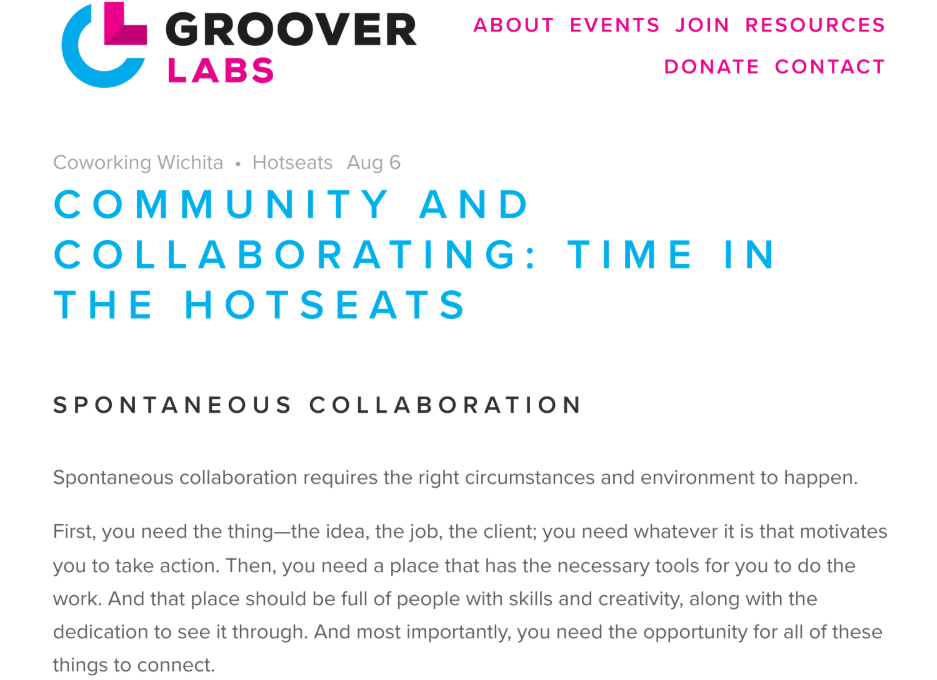
Blog Post: Groover Labs. The Hotseat Membership is the entry level membership for Groover Labs. This blog was written as a part of an awareness campaign to explain the product and describe what to expect, written in such a way to encourage the reader to imagine themselves participating.
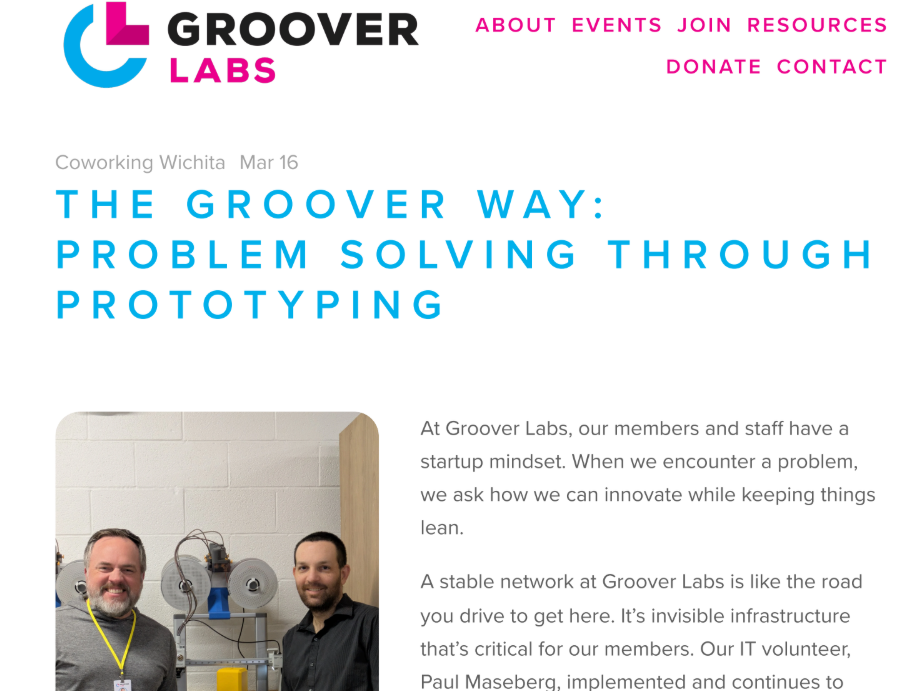
Blog Post: Groover Labs. This blog post was written primarily for founders and those with physical products, as well as a statement piece of the sort of culture Groover Labs tries to encourage.
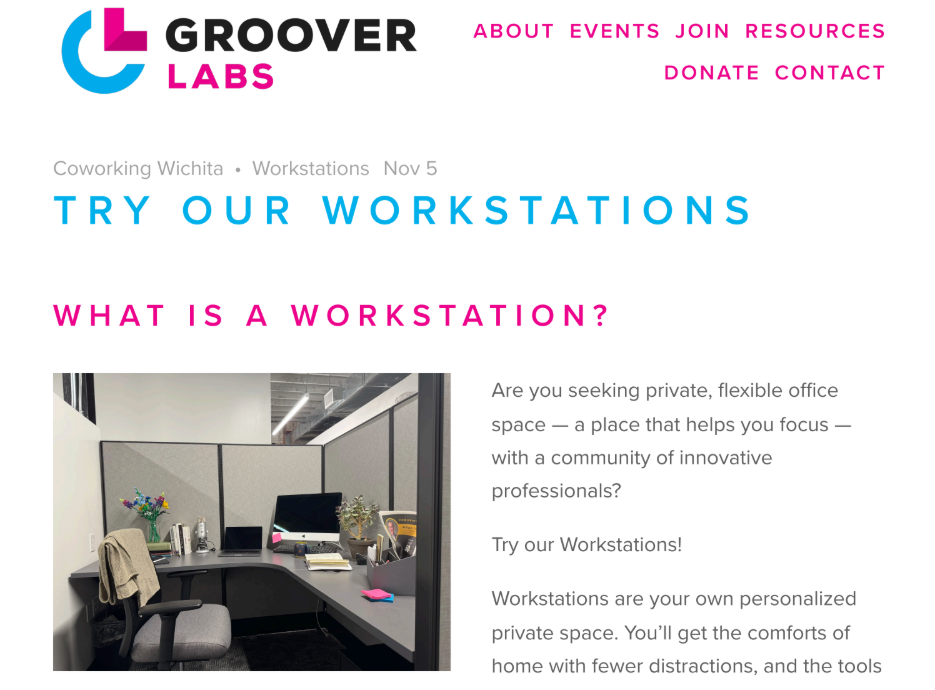
Blog Post: Groover Labs. This directly introduced our newest product, the Workstations. The challenge was, how to make cubicles interesting? We had some of our members test out the space and they loved the amount of work they were able to accomplish. So that, and the amount of personalization is what I decided to highlight in our messaging.
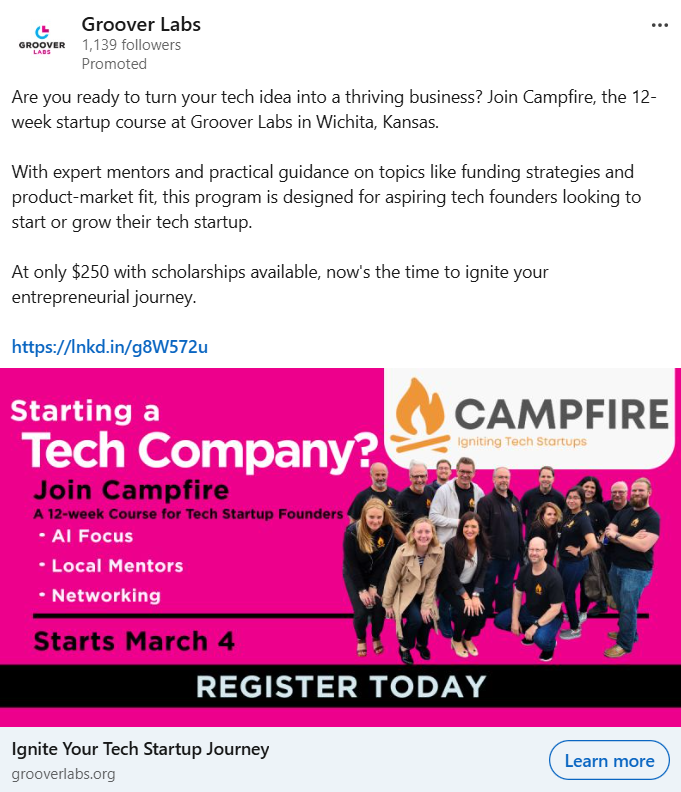
LinkedIn Ad: Groover Labs, Campfire Campaign. With this ad and in combination with organic social content, I reached our course registration goals in 8 days with 35,757 impressions, 543 website visits, and $ .50 CPC.
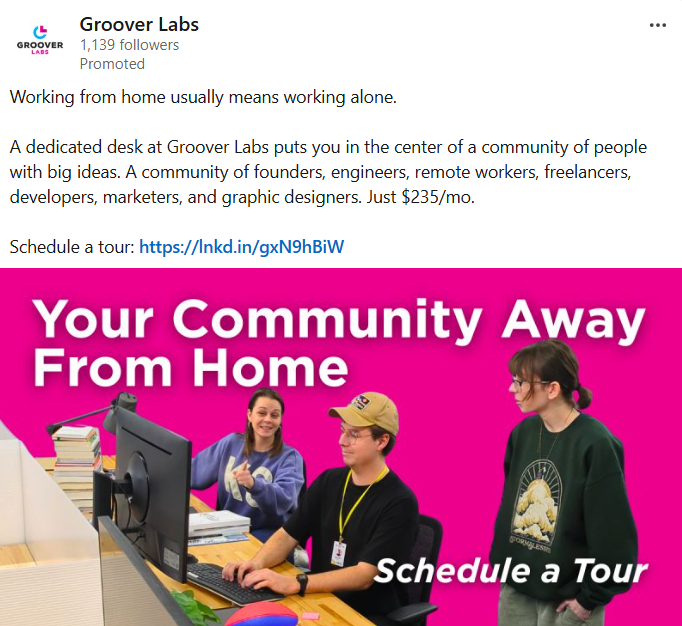
LinkedIn Ad: Groover Labs, Dedicated Desk Campaign. This ad was one of three assets that I ran to test to see what resonated most with our audience. It led to 17,499 impressions, 280 websites visits, $1.09 CPC, and 4 signups.